
Minisan (Islands)
Provided by: Minisan|Published on: September 20, 2023|Last updated: July 16, 2026
Grades: 9, 10, 11, 12
Type: Videos
Subjects: Social Studies, Biology, Earth and Space Sciences, Other
Authors: Minisan
Location: North America, North America > United States, North America > United States > Michigan, North America > United States > Wisconsin
This resource has been reviewed by SubjectToClimate's climate scientists and verified for scientific accuracy and up-to-date information. Learn about our review process →
This resource has been reviewed by SubjectToClimate's climate scientists and verified for scientific accuracy and up-to-date information. Learn about our review process →
Synopsis
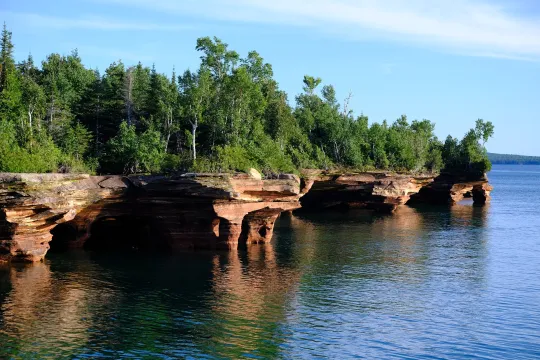
- This interactive map examines the numerous ecosystems in or near Wisconsin's Apostle Islands and integrates the traditional Ojibwe ecological knowledge about how climate change and human activity are impacting these ecosystems.
- Students can click on various locations on the map to bring up ecological information, view and listen to the Ojbiwe names for various items, see a 360-degree view of the location, view maps, charts, and videos, and learn something unique about each location.
Teaching Materials
Positives
- Each location contains information about the physical characteristics, plants, animals, and human connections associated with them.
- This site is filled with engaging pictures and useful information about the Ojibwe culture and living environment.
Additional Prerequisites
- You can use the "Ecosystems" tab to navigate all 12 locations on the map.
- The other tabs along the top provide additional information about the Ojibwe language and ecological knowledge, a user guide, and acknowledgements.
Differentiation
- Students can use this site as a basis for an informative essay about how climate change impacts ecosystems in the Upper Midwest.
- Teachers can use portions of this resource as a conceptual introduction to biodiversity, the importance of biodiversity, and how climate change is impacting biodiversity.
- This site can enhance a classroom discussion on how "traditional ecological knowledge" can improve our understanding of specific ecosystems and how they are affected by climate change.
- Portions of this resource can support a classroom discussion on how climate change increases the severity and frequency of extreme weather events.
Over the years, the Ojibwe people have lived in harmony with nature. However, this resource explores how climate change is degrading twelve ecological hotspots within the Wenaboozhoo Minisaning (the Apostle Islands). Students can explore how the people have adopted a sustainable land management approach (a combination of native ecological knowledge with scientific ecological knowledge) to conserve their natural ecosystems. However, climate change is already altering some of their ecological hotspots and this is setting a pathway for the Ojibwe people to adapt and respond to climate change impacts. The resource is well-sourced and is recommended for teaching.
Teaching Tips
Standards
Resource Type and Format
Scientist Reviewed
This resource has been reviewed by SubjectToClimate's climate scientists and verified for scientific accuracy and up-to-date information. Our review process ensures that every resource in our library reflects the current state of climate science.
Learn about our review process →