
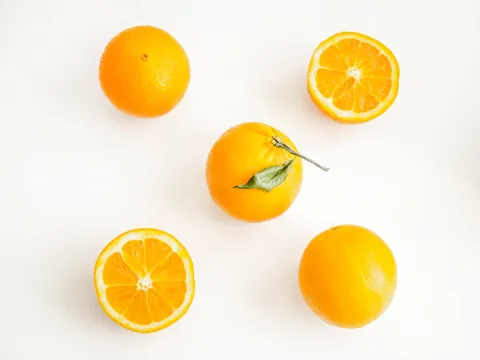
Oranges: A Taste of California Sunshine
Provided by: Center for Ecoliteracy|Published on: December 9, 2022|Last updated: July 16, 2026
Grades: 3, 4, 5
Type: Lesson Plans
Subjects: Science, Social Studies
Authors: Center for Ecoliteracy
Location: North America, North America > United States, North America > United States > California

This resource has been reviewed by SubjectToClimate's climate scientists and verified for scientific accuracy and up-to-date information. Learn about our review process →
This resource has been reviewed by SubjectToClimate's climate scientists and verified for scientific accuracy and up-to-date information. Learn about our review process →
Synopsis
- In this hands-on lesson, students will read, observe and taste-test navel oranges, attempt to locate their orange among others after careful observation, and write descriptive paragraphs.
- Students will also learn about Eliza Tibbets and the history and importance of California's navel orange industry.
Teaching Materials
Positives
- The step-by-step directions provide all of the information needed to walk through this lesson, including learning objectives, vocabulary terms, reproducibles, assessment questions, and additional resources.
- This lesson includes printable materials that are colorful, engaging, and provide supports to help aid comprehension of the material.
Additional Prerequisites
- This lesson includes a somewhat lengthy materials list, so be sure to prepare ahead of time.
- Teachers will need to bring enough oranges for each student or pair, referring to the "Selecting Oranges" section for tips on choosing the best fruits for this lesson.
Differentiation
- Since this lesson includes a writing task, consider providing writing supports might be most appropriate for your students, such as a checklist, writing rubric, or a writing graphic organizer.
- As extension activities, refer to the suggestions in the lesson plan, such as conducting comparison tasting or having students research how drought and climate change may impact California's citrus industry.
- If time allows, consider having students cut out the "What Makes It Unique?" handout ahead of time to avoid disrupting the flow of the lesson.
- Before students write descriptors on their "What Makes It Unique?" cubes, brainstorm examples of words or pictures that they might use to describe the unique characteristics of their oranges.
- Other activities that might supplement this lesson include these enrichment activities and these posters about other California-grown fruits and vegetables.
This resource is an in-depth lesson on Californian grown oranges. It dives into its history as well as its cultivation. All information within is accurate and verifiable. This resource is recommended for teaching.
Teaching Tips
Standards
Resource Type and Format
Scientist Reviewed
This resource has been reviewed by SubjectToClimate's climate scientists and verified for scientific accuracy and up-to-date information. Our review process ensures that every resource in our library reflects the current state of climate science.
Learn about our review process →