
Shorebird Identification
Provided by: Project Oceanography|Published on: May 15, 2024|Last updated: July 16, 2026
Grades: 6, 7, 8
Type: Videos
Subjects: Biology
Authors: Project Oceanography, The Connecticut Audobon Society
Location: North America, North America > United States, North America > United States > Connecticut
This resource has been reviewed by SubjectToClimate's climate scientists and verified for scientific accuracy and up-to-date information. Learn about our review process →
This resource has been reviewed by SubjectToClimate's climate scientists and verified for scientific accuracy and up-to-date information. Learn about our review process →
Synopsis
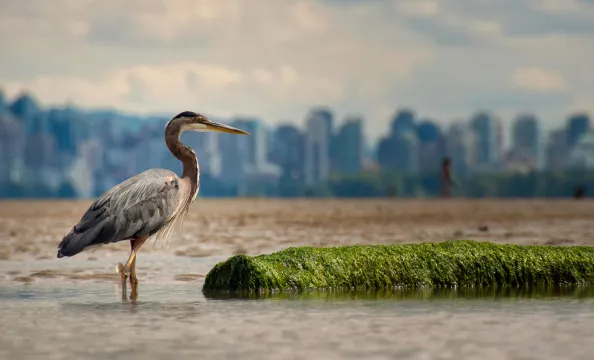
- In this resource, students will learn about the habitats of Connecticut's shorebirds, the impact of pollution of these habitats, and how to identify the birds.
- Students will identify plastic waste in shorebird nests, test their shorebird identification skills with a quiz, and collect data on the number of shorebirds.
- Students will look at shorebirds on Flat Hammock and South Dumpling Islands.
Teaching Materials
Positives
- Students should be able to do the first two activities independently, making this an easy-to-implement sub plan.
- Students will love seeing and hearing the different shorebirds.
Prerequisites
- The audio on the first slideshow doesn't work.
- Section 3 asks students to use the bird counting sheet per the teacher's instructions, but the teacher instructions aren't available in the resource. If the school is close to these birds' habitats, students can go birdwatching and use the data sheet to record the birds they find.
- Students may need some words defined before doing the activities, such as pelagic, migrate, metabolism, and others.
Differentiation & Implementation
- Math students can practice graphing skills by creating various graphs with the Bird Counting Datasheet.
- Students in language arts classes can write poems to illustrate the trash in the habitats.
- Some students may benefit from a graphic organizer to add to as they look through the slides.
- Students can log their plastic use and make a commitment to reduce it to protect shorebird habitats.
This resource allows students to learn about shorebirds, observe them, and record the features they exhibit. Shorebirds have been endangered by human activities and this resource provides students with the tools to observe, record and interpret those changes. The resource is well sourced and is recommended for teaching.
Teaching Tips
Standards
Resource Type and Format
Scientist Reviewed
This resource has been reviewed by SubjectToClimate's climate scientists and verified for scientific accuracy and up-to-date information. Our review process ensures that every resource in our library reflects the current state of climate science.
Learn about our review process →