
The Driest Places on Earth
Provided by: SciShow Kids|Published on: June 9, 2025|Last updated: July 16, 2026
Grades: K, 1, 2, 3, 4, 5
Type: Videos
Subjects: Science
Authors: SciShow Kids
Location: Polar Regions, South America
This resource has been reviewed by SubjectToClimate's climate scientists and verified for scientific accuracy and up-to-date information. Learn about our review process →
This resource has been reviewed by SubjectToClimate's climate scientists and verified for scientific accuracy and up-to-date information. Learn about our review process →
Synopsis
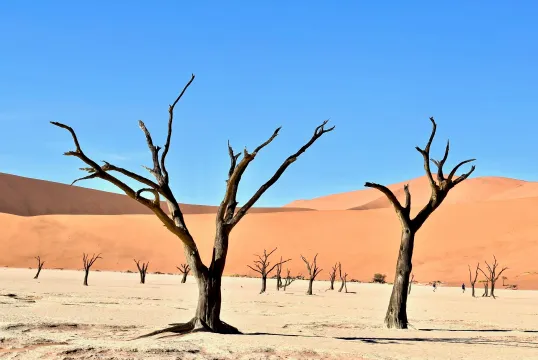
- This 6-minute video from SciShow Kids explains the difference between weather and climate, the definition of a desert, and what causes desert climates.
- Students see the Atacama Desert and Antarctica as examples of desert climates.
Teaching Materials
Positives
- The video explains weather versus climate in a way that is accessible to young learners.
- The visuals used in the video aid in the explanations and make important concepts clear.
Prerequisites
- Students should be familiar with the fact that plants need water to grow.
- Students can find Chile and Antarctica on a map before watching the video in order to be familiar with these locations.
Differentiation & Implementation
- This lesson on climate versus weather can be used to deepen learning on this topic.
- Students can learn more about deserts on this virtual field trip.
- Engage students with an activity to make rain gauges and collect precipitation data.
- This video on habitats can be used to explore how animals and plants evolve and adapt to live in different climates.
- Students can discuss what might happen to the area they live in if it gets more or less rainfall each year.
- After learning about the difference between weather and climate, students can discuss how the climate is changing due to human activities.
This video discusses and defines deserts as well as the difference between weather and climate. This difference is important to understand because the weather can change from day to day or season to season, but climate stays relatively constant in comparison. Deserts are defined by their lack of precipitation and not temperature, which can be a common misunderstanding. The information presented is accurate, and this resource is recommended for teaching.
Teaching Tips
Standards
Resource Type and Format
Scientist Reviewed
This resource has been reviewed by SubjectToClimate's climate scientists and verified for scientific accuracy and up-to-date information. Our review process ensures that every resource in our library reflects the current state of climate science.
Learn about our review process →