
Why are Wildlife Crossings Crucial for Animals and Humans?
Provided by: The Kid Should See This|Published on: June 20, 2025|Last updated: July 16, 2026
Grades: 6, 7, 8, 9, 10, 11, 12
Type: Articles/Websites
Subjects: Biology, Engineering
Authors: Colorado Department of Transportation, The Kid Should See This
Location: Europe, North America, North America > United States > California, North America > United States > Colorado, North America > United States > Montana
This resource has been reviewed by SubjectToClimate's climate scientists and verified for scientific accuracy and up-to-date information. Learn about our review process →
This resource has been reviewed by SubjectToClimate's climate scientists and verified for scientific accuracy and up-to-date information. Learn about our review process →
Synopsis
- Students will watch a video from the CO Dept. of Transportation and read an article describing various wildlife corridors and their success, including the results of a five-year study analyzing the effectiveness of the SH-9 corridor in Colorado.
- Students will read about other corridors in the Netherlands, Canada, Flathead Indian Reservation, and Los Angeles.
- The resource also links to a related lesson teachers may find useful for extending this topic.
Teaching Materials
Positives
- Students will love the footage of wildlife using the corridor.
- The article is brief, providing additional information while remaining student-friendly
Prerequisites
- It may benefit students to understand how human activities and infrastructure expansion impact animals and their habitats.
Differentiation & Implementation
- Connect this resource to climate change topics by relating the importance of natural ecosystems and species within them as climate solutions to support vital ecosystem services that regulate carbon, water, and other nutrients.
- The included video has a lot of text for viewers to read and no voiceover or speaking. The visuals can distract from the text, and students may miss bits of the information. Teachers can play the video twice, encouraging students to just take in the visuals the first time and then encouraging a close read the second time. Alternatively, teachers can slow the video playback speed or read the text out loud as students watch.
- Teachers can follow this video with this activity where students can design their own wildlife corridor.
- This video can follow a lesson about habitat fragmentation and how it impacts biodiversity. This lesson plan can help with this topic.
- The article mentions several wildlife corridors and provides links where readers can find more information about them. Students can select one of these corridors and research the building process, the animals the corridor serves, and how successful it has been.
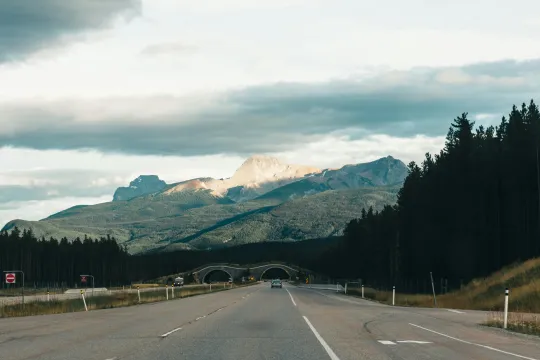
This video describes the success of wildlife crossings in Colorado. Details about where the crossings are, how often they are used, and what animals primarily use them are included. The crossings are an example of a conservation strategy. Additionally, these crossings depict a way humans can be more environmentally conscious with their infrastructure projects.
Teaching Tips
Standards
Resource Type and Format
Scientist Reviewed
This resource has been reviewed by SubjectToClimate's climate scientists and verified for scientific accuracy and up-to-date information. Our review process ensures that every resource in our library reflects the current state of climate science.
Learn about our review process →