

US Energy Department Announces Major Nuclear Fusion Breakthrough
December 14, 2022

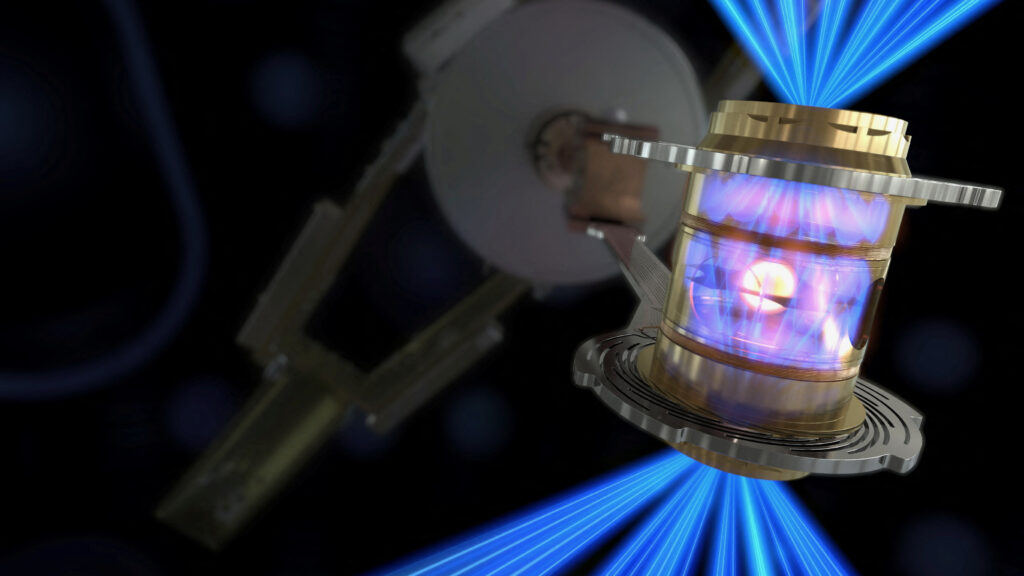
In a breakthrough that “will go down in the history books,” scientists at the Lawrence Livermore National Laboratory have pulled off net-positive nuclear fusion. In simpler words, the scientists pretty much were able to make the same type of energy that powers the sun.
Nuclear fission produces energy by splitting atoms apart. Fusion releases energy by combining atoms. This makes new atoms. It doesn’t result in radioactive waste. Fission does. So, fusion is more sustainable. That's why it's been a goal for years. Past experiments have fused atoms. But they left scientists with a puzzle. The amount of energy needed to start the process was much more than the amount of energy that was made. That meant fusion wasn't a great energy source. The new results might change that.
The scientists used 192 lasers to superheat a tiny diamond capsule. In doing so, the team fused the atoms together. It caused a burst of energy. The energy created was more than the amount needed to carry out the experiment. That's called a “net-positive gain.” It’s the “Holy Grail” of fusion research that scientists have long looked for.
Officials note that we’re still a long way off from using fusion energy. The experiment needs to be repeated. They also need to figure out a way to capture the energy and get the reaction to create enough power to rival our current energy sources. Scientists are hopeful, though.
“It’s almost like it’s a starting gun going off,” a scientist told NBC News.
Photo from Reuters.
News brought to you by 
Read More News Stories Today!