
Villages Destroyed as Flooding Strikes The Democratic Republic of Congo
May 10, 2023

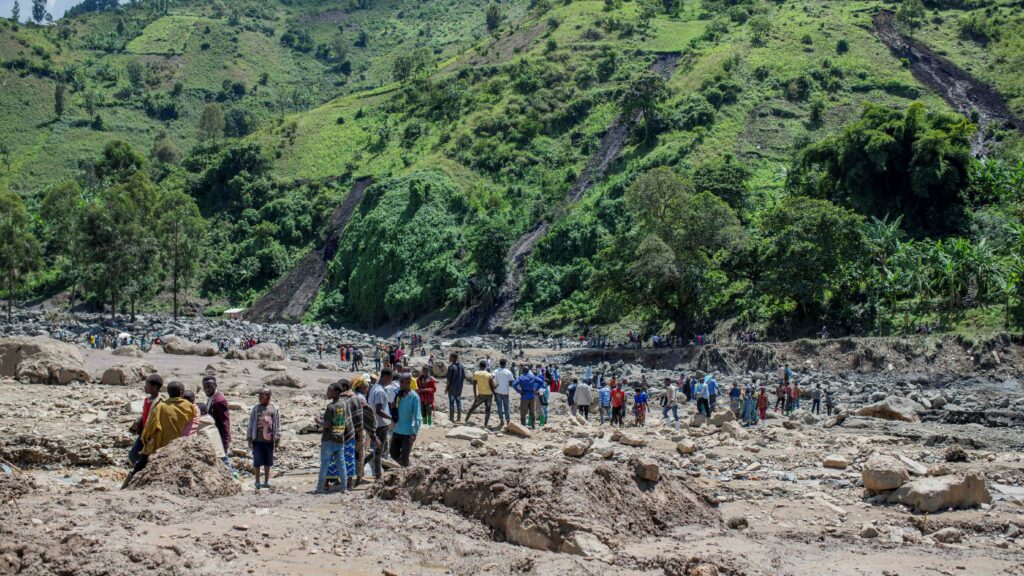
Days of heavy rain have devastated several remote areas in the eastern part of The Democratic Republic of Congo. More than 400 people are dead and thousands more are missing.
Last Thursday, floods struck the mountains of South Kivu province. They ruined the villages of Nyamukubi and Bushushu. Big rocks fell from the mountains and crushed buildings. Mudslides blocked roads. This has made rescue efforts difficult and left hundreds without access to food or water.
“It’s like the end of the world,” Gentille Ndagijimana, 27, told Agence France-Presse. Her mother, father, and two sisters died in the flooding.
Timing also made the situation worse. Last Thursday was market day in Bushushu. This meant that more people were in the area. More than 5,500 are missing. At least 3,000 homes are gone.
People are trying to help find those who died. However, officials also worry about survivors. Doctors Without Borders asked for donations of medicine. Sicknesses can spread easily in the unsanitary water after the flood.
The country of Rwanda also had flooding. It killed 130 people there last week. It left over 10,000 people without homes. The United Nations’ Secretary-General offered his sympathy to both countries. He pointed out that developing countries often suffer more from climate-related disasters.
He told Le Monde that this is another example of how climate change hurts countries that didn't cause it.
Photo from Reuters.
Reflect: Should developed countries play a role in supporting developing countries that are more vulnerable to climate-related disasters? Why or why not?
News brought to you by 
Read More News Stories Today!