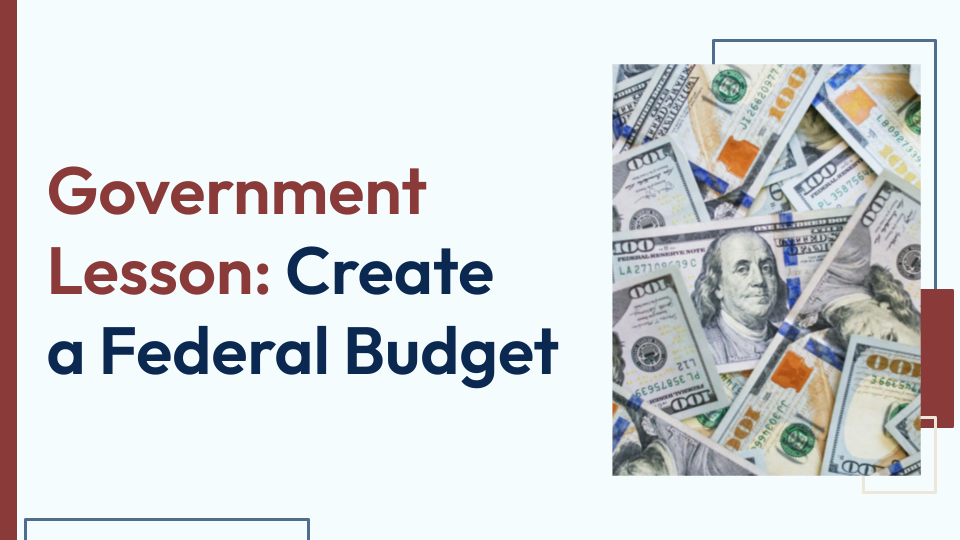
In this lesson, students explore long-term thinking, analyze federal spending, and design a government budget that balances present and future needs, culminating in a reflection and discussion on intergenerational responsibility.
Inquire: Students watch a TED video by Roman Krznaric called “How to Be a Good Ancestor.” It allows students to see sustainability from a future perspective.
Investigate: Students explore usaspending.gov and examine spending by federal agencies in the fiscal year 2025. In groups, students design a budget for the federal government. Some students represent people living now, while others represent people living seven generations in the future.
Inspire: Students reflect on what it feels like to represent those living now and those living seven generations in the future. Finally, students share, comment, and deepen each other’s ideas and opinions.
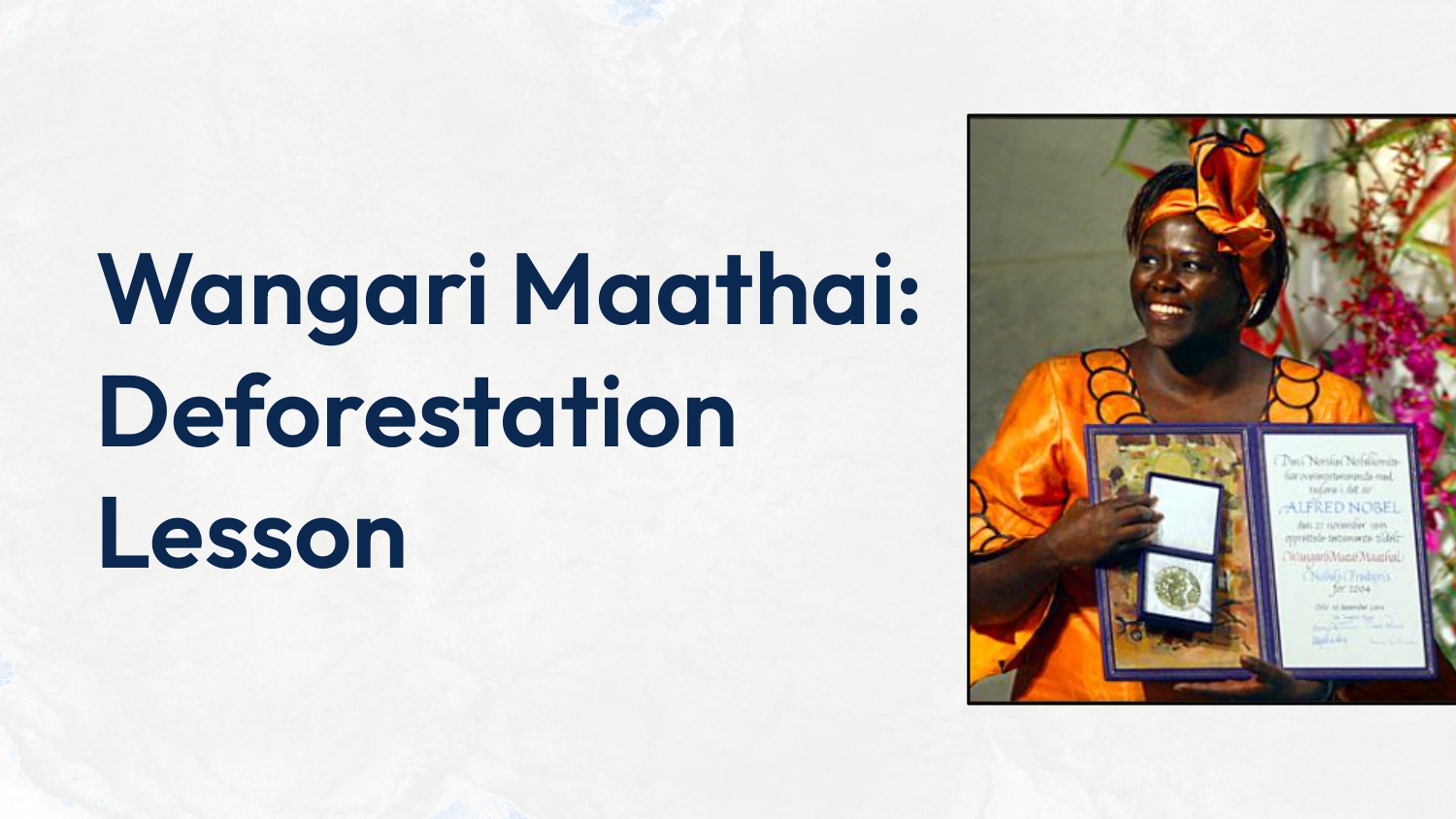
This lesson introduces African environmentalist Wangari Maathai and links deforestation with the concepts of governance, poverty, and income opportunities for women in Kenya.
Inquire: Students watch a video explaining ways to monitor the world’s forests. Next students explore the Global Forest Watch Interactive Map showing the health of the world’s forests.
Investigate: Students watch a video about Wangari Maathai & The Green Belt Movement. Students answer guided questions as they watch the video.
Inspire: Teacher reads Wangari Maathai’s version of the hummingbird story. After listening, students write pledges about how they can contribute to restoring our Earth.
In this lesson, students are introduced to the concept and importance of green spaces through the book Sofia Valdez, Future Prez by Andrea Beaty. Then, students have a chance to start imagining and designing their own ideal green space.
Inquire: Students examine the idea of a green space and read the book Sofia Valdez, Future Prez by Andrea Beaty.
Investigate: Students explore the definition of green space and explore their neighborhood using Google Maps or Google Earth.
Inspire: Students begin to design their own "perfect” green space.
In this lesson, students consider the goods and services provided by green spaces. Students also learn about environmental justice as it relates to the prevalence of green spaces in different neighborhoods.
Inquire: Students brainstorm ideas on how green spaces provide goods and services.
Investigate: Students look at satellite images over time and of different neighborhoods to understand that green spaces are disappearing in general, and that the ones we have are not distributed equally in all communities.
Inspire: Students learn about how a young activist Jaysa Hunter-Mellers is advocating for environmental justice in her community, and add to the designs of their ideal green spaces.
In this lesson, students learn about ecosystem services, with a focus on cultural services important to Indigenous peoples. Students read about Indigenous activism and consider how they can be activists, too.
Inquire: Students explore the four types of ecosystem services: giving services, checking services, supporting services, and cultural services.
Investigate: Students read two articles on Newsela about Indigenous Peoples; one is about government policy, and the other is about climate activism.
Inspire: Students watch a video on youth climate activists and add to their drawings of their ideal green space.
In this lesson, students learn the story of Ken Sparks, an urban farmer in LA, and the important ecosystem services his farm provides to his community. Students then conduct their own research on the benefits of green spaces for our mental and physical health, as well as the health of the planet.
Inquire: Students learn about a community activist named Ken Sparks, who turned his patio into a green space and inspired others to do the same.
Investigate: Students conduct research to further explore the relationship between green spaces and mental health, physical health, ecosystem health, and climate change.
Inspire: Students watch a video of Bee and Me to gain inspiration to add to their drawings of ideal green spaces, and consider what health benefits their green space will offer the community.
In this lesson, students apply what they have learned about environmental justice to compare data about median income, race, tree cover, and air pollution in Compton and Pasadena. Students write inequality statements to reflect the data that they extract from maps.
Inquire: Students review information from previous lessons on green spaces and environmental justice.
Investigate: Students compare maps of the two cities of Compton and Pasadena, California, looking at data on median income, race, tree cover, and air pollution to write inequality statements.
Inspire: Students watch a video on youth climate activists and complete their drawings of their ideal green space.
In this lesson, students consolidate and share their learning about the importance of green spaces. Students write a persuasive letter advocating for green spaces and reflect on their advocacy.
Inquire: Students share the drawings they have been working on of the perfect green space and explain how it will support the health of the community and the Earth.
Investigate: Students write a letter advocating for more green spaces.
Inspire: Students share their letters and reflect on how it feels to take action in their community.
In this lesson, students learn how to analyze story characters, reread Why Is Coco Orange?, and complete a journal entry.
Inquire: Students learn about and practice identifying character traits.
Investigate: Students reread Why Is Coco Orange? and focus on how the characters support Coco.
Inspire: Students identify character traits in Coco and Coco's friends. Then, students complete a journal entry, choosing one of three provided options.
Students learn about renewable and nonrenewable sources and ways they use energy in their everyday lives. Students use data about where our energy comes from in the U.S. to start conversations about conserving energy.
Inquire: Students define energy and brainstorm about their own energy use.
Investigate: Students learn about renewable and nonrenewable energy and complete an energy sort.
In this lesson, students reflect on their personal energy use. Students learn about why it is important to conserve energy and make an informative poster to share what they learned.
Inquire: Students review how we use energy in our daily lives and share the results of their energy audits.
Investigate: Students make a bar graph of their energy footprints and use it to reflect on energy use around the world and why it’s important to conserve energy.
Inspire: Students create an inspirational conservation poster to display in their class or school.
Students read about an energy resource and prepare an infomercial pitch to sell their assigned type of energy. Students discuss the pros and cons of each energy source to determine which one is “best.”
Inquire: Students recall what they have learned so far about renewable and nonrenewable energy sources.
Investigate: Students read a nonfiction book on a specific type of energy in order to prepare an infomercial arguing for its adoption by the town.
Inspire: Students pitch their energy source to the class and then discuss which energy source is “best.”
In this lesson, students learn the story of William Kamkwamba and consider how they can help their communities. Students then build their own renewable-powered device and share their project with the broader school community.
Inquire: Students listen to a read aloud of The Boy Who Harnessed the Wind, a story about a Malawian boy named William Kamkwamba who helped bring energy to his community.
Investigate: Students engage in a project to build a renewable-powered device.
Inspire: Students write about their project and share their project with the broader school community.
In this lesson, students use maps to compare renewable energy usage around the world. Students consider how using renewable energy can positively impact people’s lives.
Inquire: Students recall what they learned in previous lessons and use Google Maps to browse renewable energy projects around the world.
Investigate: Students research one or more countries and complete worksheets analyzing how much renewable energy is used in each country.
Inspire: Students watch a video on Iceland and geothermal energy, and discuss what life would be like if the United States used as much renewable energy as Iceland.
In this lesson, students gain inspiration from the work of youth activists around the world. Then, students advocate for renewable energy in their schools and communities.
Inquire: Students hear the stories of other young people around the world who are taking climate action.
Investigate: Students write an opinion piece that advocates for renewable energy usage.
Inspire: Students share their writings and reflect on the experience of taking action.
Grade3-5
Subject Science,Social Studies,English Language Arts
In this lesson, students discuss and evaluate artwork by Jill Pelto, read Sven's Search for Clean Energy to learn about renewable and nonrenewable energy, and demonstrate their learning through writing and drawing.
Inquire: Students discuss and evaluate artwork by Jill Pelto and learn more about her career.
Investigate: Students learn the definitions of renewable and nonrenewable energy, then read and discuss Sven's Search for Clean Energy.
Inspire: Students read about renewable and nonrenewable energy and write a paragraph or draw an accompanying picture to demonstrate their new knowledge.
Grade3-5
Subject English Language Arts,Visual and Performing Arts
In this lesson, students analyze photos and murals about plastic pollution and discuss the messages they convey. They critique artwork using guiding questions and write structured paragraphs explaining the artist’s message and offering their own creative suggestions.
Inquire: Students view images of plastic pollution around the world and share the message the photos convey.
Investigate: Students learn about art activists and use artwork critiquing question cards to view two art murals.
Inspire: Students evaluate artwork with a partner and then write a response identifying the artist’s message through the artwork.
Grade3-5
Subject English Language Arts,Visual and Performing Arts
In this lesson, students learn about youth activists around the United States, discuss a local environmental issue, brainstorm ideas for climate action, and write a paragraph response.
Inquire: Students share their concerns about the environment and assess their ability to make change.
Investigate: Students either watch a video about a youth activist and conduct research on youth activists or listen to a read aloud of the book Old Enough to Save the Planet.
Inspire: Students think about local environmental issues and write a paragraph explaining the importance of one issue impacting their community.
In this lesson, students read and interpret data on average global temperature, practice skills with decimals and fractions, make line graphs, and create line graph climate art.
Inquire: Students learn about artist Jill Petro who uses data to make climate art.
Investigate: Students read and interpret data from a chart, understand tenths, and make a line graph.
Inspire: Students use their line graph to make a piece of climate art, using Jill Pelto as inspiration.
In this lesson, students identify a climate message to convey through their artwork, learn watercolor techniques, identify their target audience, create a rubric, and complete their artwork.
Inquire: Students analyze Jill Pelto's climate data watercolor artwork.
Investigate: Students learn how colors create emotion and practice watercolor techniques.
Inspire: Students develop a climate change message and create watercolor artwork.
In this lesson, students explore how plants transform carbon dioxide into oxygen through photosynthesis, learn about the greenhouse effect by calculating their ecological footprint, and then brainstorm ways to reduce their carbon footprint.
Inquire: Students reflect on what they know about photosynthesis and how plants transform carbon dioxide into oxygen.
Investigate: Students learn about the greenhouse effect and calculate their ecological footprint. Inspire: Students generate ideas on how to reduce their carbon footprint and impact on the environment, and write a paragraph response.
In this lesson, students compare and contrast emissions from different modes of transportation and explore the concept of transportation planning.
Inquire: Students analyze a bar graph of carbon dioxide emissions by different modes of transportation and calculate the most environmentally conscious modes of travel based on emissions.
Investigate: Students analyze commuter survey results of the top concerns with public transportation and complete real-world math problems based on different transportation scenarios, calculating the difference in carbon emission outputs.
Inspire: Students learn about transportation planners and watch a video about Hong Kong’s transit system.
This lesson promotes students’ understanding of the power and influence of the media. Students will leverage this understanding to develop their own media campaigns for their reimagined metro systems.
Inquire: Students reflect on how their reimagined metro systems address the top ten concerns riders had with the metro.
Investigate: Students think critically about how different transportation advertisements get consumers to want to use their services or purchase their products.
Inspire: Students brainstorm an advertisement for their reimagined metro system.
This lesson features the final advertisement presentations and provides students with the opportunity to think about how to use these projects to make an impact in real life.
Inquire: Students reflect on the advertisement process and their role in their small groups. Investigate: Students present their final advertisements to their peers. Inspire: Students brainstorm what to do with their ideas in order to increase metro/public transit ridership in their community.
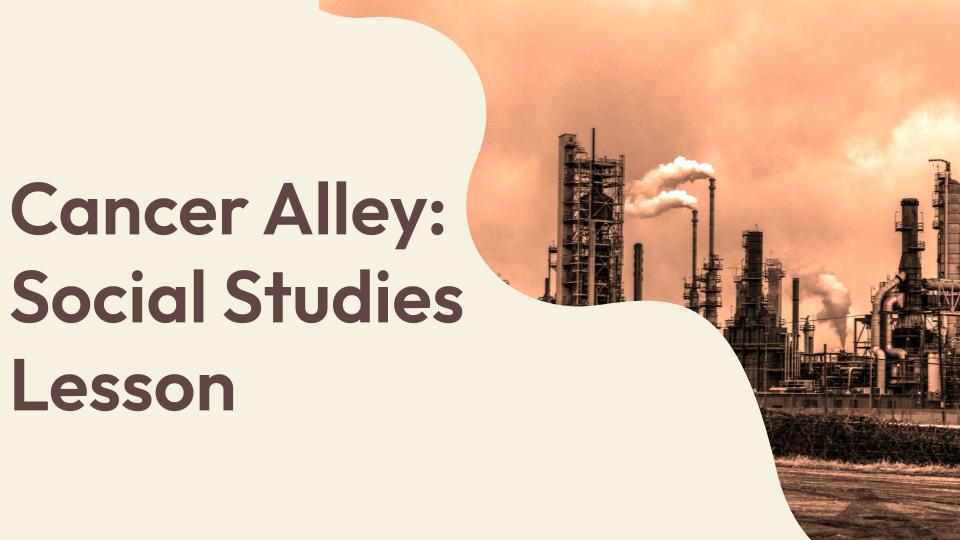
In this lesson, students learn about environmental justice by exploring an interactive map, learning about Cancer Alley, and taking concrete action to address environmental injustice.
Inquire: Students are introduced to the term environmental justice and learn about the Environmental Justice Index (EJI).
Investigate: Students learn about communities facing environmental injustice using an interactive map and watching a video about Cancer Alley.
Inspire: Students write a letter to a government official or business leader sharing what they learned and urging them to take action.

.jpg)
.jpg)
.png)
.png)
.png)
.jpg)