
Crowding Can Be Seedy
Grades: K, 1, 2
Type: Lesson Plans
Subjects: Science, Mathematics
Authors: Population Education
Location: Earth
This resource has been reviewed by SubjectToClimate's climate scientists and verified for scientific accuracy and up-to-date information. Learn about our review process →
This resource has been reviewed by SubjectToClimate's climate scientists and verified for scientific accuracy and up-to-date information. Learn about our review process →
Synopsis
- This well-designed lesson plan from Population Education introduces students to the concepts of population density and carrying capacity using a kinesthetic game, reflection questions, and an experiment.
- The resource includes an instructional video for teachers, suggestions for differentiation, and a student worksheet for recording data and answering questions.
Teaching Materials
Positives
- This fun and engaging lesson will appeal to kinesthetic, visual, and auditory learners.
- The instructional video walks teachers through the entire lesson, including the Sprouts Game activity.
- The discussion questions give students an opportunity to understand how population density affects plants and humans.
Prerequisites
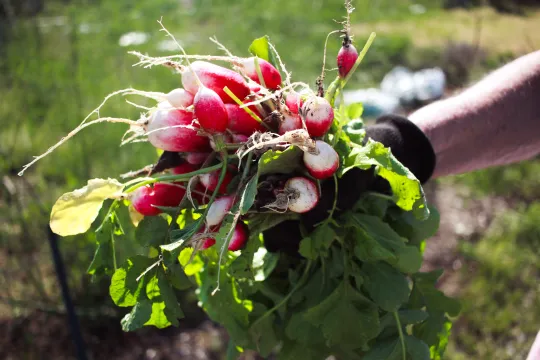
- Teachers should plan ahead for the experiment portion of this lesson because it takes 30 days for the seeds to sprout and grow.
- Teachers must gather the materials needed for the radish growing experiment and a long piece of string for the game.
- Teachers must sign in to download the lesson plan.
Differentiation & Implementation
- For the experiment, the resource suggests that kindergarten students can count the number of leaves on the plants and draw pictures to show the plant growth, first graders can use an object such as blocks to measure the plant growth, and second graders can measure the plants with a ruler.
- As an extension, students could talk about the health benefits of eating vegetables and then start a school garden or eat the radishes for snack time.
- Students can also check out this PBS video on habitat basics.
This resource connects students to information about the effect of increasing population density within any niche. This is recommended for the classroom.
Teaching Tips
Standards
Resource Type and Format
Scientist Reviewed
This resource has been reviewed by SubjectToClimate's climate scientists and verified for scientific accuracy and up-to-date information. Our review process ensures that every resource in our library reflects the current state of climate science.
Learn about our review process →