2 Billion People Lack Access to Safe Drinking Water, UN Says
March 23, 2023

Thought Question: How might your life be affected if you didn’t have access to clean drinking water on a daily basis?
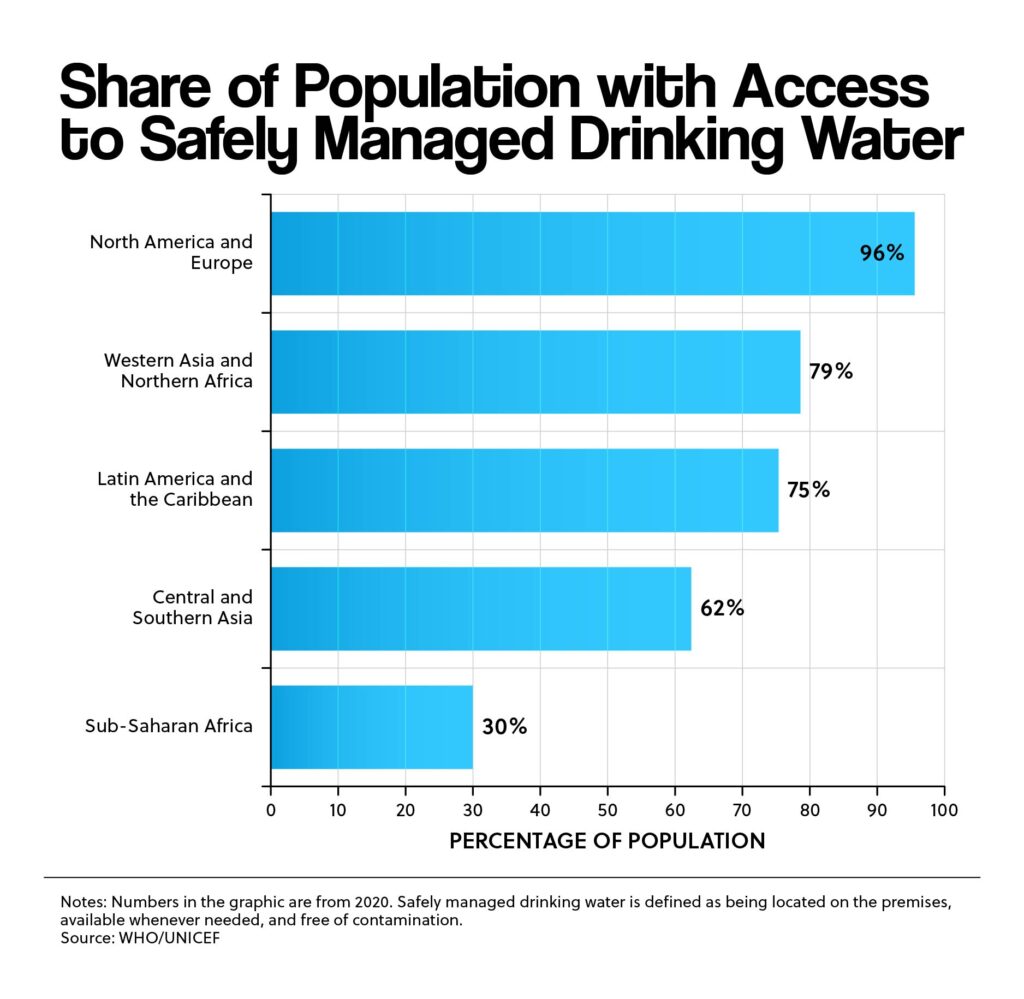
Most people in the US and other developed nations take for granted easy access to clean drinking water. But a new report offers a shocking statistic. More than 1 in 4 people around the world do not have access to safe water. This number could be growing.
The United Nations’ (UN) Clean Water Development Report 2023 says 26% of the world’s population does not have access to safe drinking water. 46% lack access to basic sanitation. The report comes at the opening of the UN’s first major conference on water safety and supply in more than 45 years.
Richard Connor is the report’s editor-in-chief. He told reporters that it could cost up to $1 trillion per year to meet the UN’s goals of providing safe water to those who need it. 2 billion people don’t have clean water. 3.6 billion lack sanitation. Hundreds of millions of those without access to clean water are children, the report said.
Water use has been rising globally for the past 40 years. The report says that rate is about 1% per year. That increase should continue through 2050. Developing countries are urbanizing. They have more cars and workplaces every year. So, they use more water.
Climate change also will play a big role in how much water is available. Said the report: “Seasonal water scarcity will increase in regions where it is currently abundant — such as Central Africa, East Asia, and parts of South America — and worsen in regions where water is already in short supply, such as the Middle East and the Sahara in Africa.”
News brought to you by 
Read More News Stories Today!