
A Herculean Find: Massive Specimen of World's Most Venomous Spider Discovered
January 12, 2024

Coming face-to-eight-eyed-face with a massive member of the world’s most venomous spider species can provoke a lot of emotions: Fear. Panic. Joy?
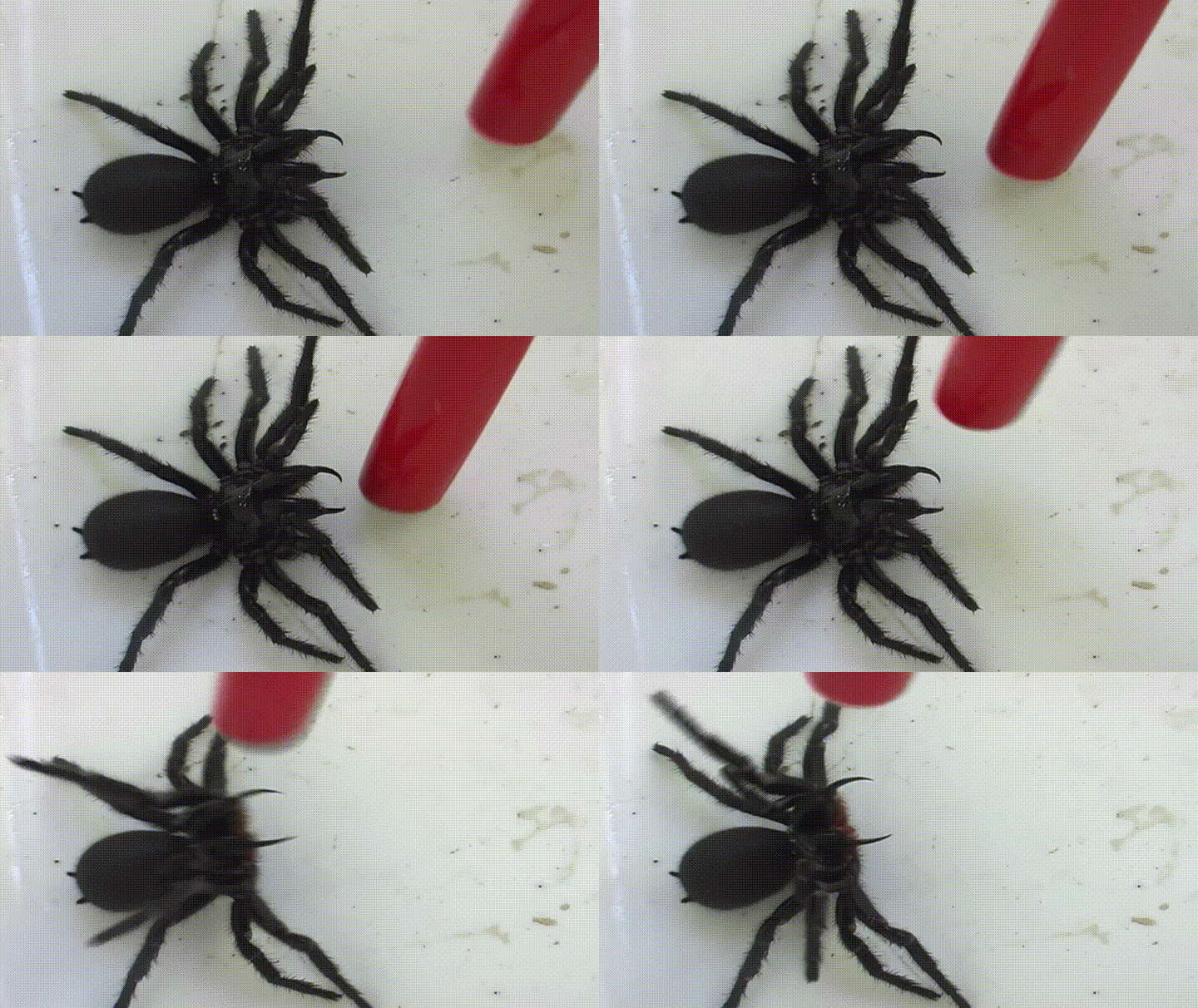
‘Twas no arachnophobe that welcomed “Hercules,” the world’s largest male Sydney funnel-web spider, to the Australian Reptile Park. The arrival of the 7.9 centimeter (3.1 inch), black-haired spider had scientists and medics buzzing with delight.
“We’re used to having pretty big funnel-web spiders (given) to the park, (but gaining) a male funnel-web this big is like hitting the jackpot,” spider expert Emma Teni told The Associated Press (AP). “Whilst female (spiders of the species) are venomous, males have proven to be more lethal.”
Hercules was found this month on the Central Coast of Australia. He eclipsed “Colossus,” the former funnel-web record holder, for the crown. And, yes, his size is stunning (scary?). But his fangs really draw the eye too. They can furnish the world’s most toxic spider bite.
“People know within minutes that they’re going to die or are in deep deep trouble,” Dr. Robert Raven told Australian Geographic. Raven's a curator of spiders at the Queensland Museum. Raven said "death has occurred with funnel webs in 15 minutes."
Ironically, it’s that same bite — or, rather, the venom it injects — that has officials cheering Hercules. They hope to milk his fangs. They aim to extract the venom to create many doses of life-saving antivenom.
“With having a male funnel-web this size in our collection, his venom output could be (massive), proving (very) valuable for the park’s venom program,” Teni said.
Way to be a hero, Herc.
GIF from GIPHY courtesy of Reddit.
Reflect: Do you think people's perceptions of venomous spiders would change if they knew more about the potential benefits their venom could have in developing life-saving treatments? Explain.
News brought to you by 
Read More News Stories Today!