
Deadly Wildfires Scorch Southern California, Send Thousands Fleeing
January 9, 2025

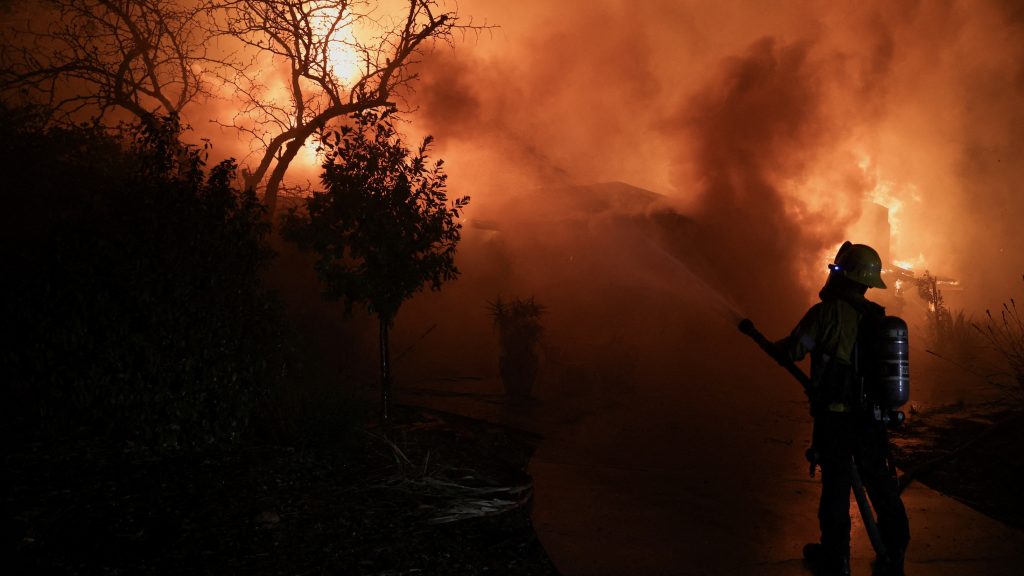
Wildfires are racing across Southern California. The blazes have sent tens of thousands of people fleeing for safety and cut off power to hundreds of thousands more. By Wednesday evening, five people had died. More than 1,000 structures had been destroyed.
Powerful Santa Ana winds have spread the fires. The two fires are named the Pacific Palisades and Eaton fires. They are burning homes and creating thick towers of gray smoke. In the northeast foothills of Los Angeles, the Eaton fire spread so swiftly that it forced nursing home workers to flee their facility. They had to push elderly residents down the street in wheelchairs and beds, The Associated Press (AP) reported.
More than 80,000 people were under evacuation orders Wednesday, and 28,000 structures were threatened. AP reports said visibility on roadways was dim. Headlights barely pierced the smoke. The crackling sounds of fire echoed through the foothills. Authorities urged people to leave as soon as they could.
Santa Ana winds grew stronger throughout the day Wednesday, topping 80 mph. That's according to the National Weather Service. They could reach over 100 mph in the foothills and mountains, the service warned.
The home of Vice President Kamala Harris is in the evacuation zone. Harris was not in California, the White House said. President Biden was in the region when the wildfires broke out. He stood next to California Governor Gavin Newsom at a news conference. Biden promised the federal government would help with funding and resources.
Reflect: How would you prepare or help others if your community faced a sudden emergency, like a wildfire?
Photo of a firefighter extinguishing flames as the Eaton Fire burns in Pasadena, California, from Reuters.
News brought to you by 
Read More News Stories Today!