

Ian’s Aftermath: Dozens Dead, Many without Power or Water, Flooding Continues
October 3, 2022

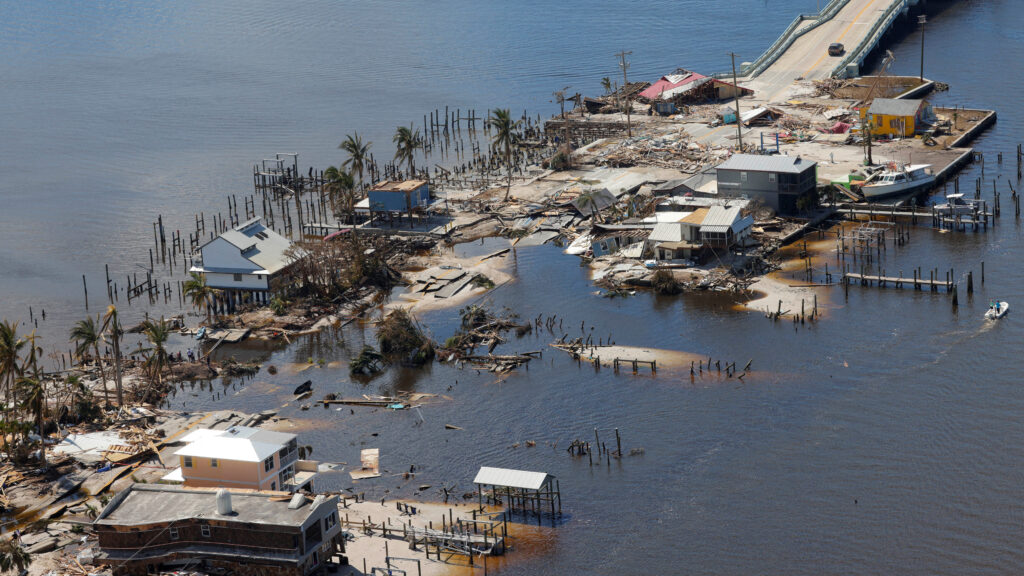
Rescue missions continued over the weekend for victims of Hurricane Ian. Ian was one of the most powerful storms ever to hit the US. Ian was a Category 4 hurricane. It knocked out power to millions. The death toll has risen into the dozens.
Florida’s Gulf Coast suffered the most. After it bashed Florida, the storm weakened, but then strengthened again. Ian spun north into the Carolinas. Hundreds of thousands remained without power in Florida on Sunday. Roads flooded, and bridges to barrier islands were washed out. People were left without cell phone service. They don't have access to basic necessities.
The Associated Press (AP) reported Sunday evening that 54 people were confirmed dead.
Pine Island is the largest of Florida’s barrier islands. Some people were trapped on the island during the storm. “The water just kept pounding the house … we watched everything just go flying by,” one man told the AP. He said he and his wife survived because they stood on a table to stay above water rising in their home.
Authorities are working to reach island residents by helicopter. Some were flown off the island. Others opted to stay. In the Carolinas, rivers and streams swelled. Flooding is still a concern.
President Biden and First Lady Jill Biden on Wednesday are scheduled to visit parts of Florida and Puerto Rico, which was hit by Hurricane Fiona.
Photo courtesy of Reuters.
News brought to you by 
Read More News Stories Today!