

Invasive Species Threatens Black Widow Spiders
March 20, 2023

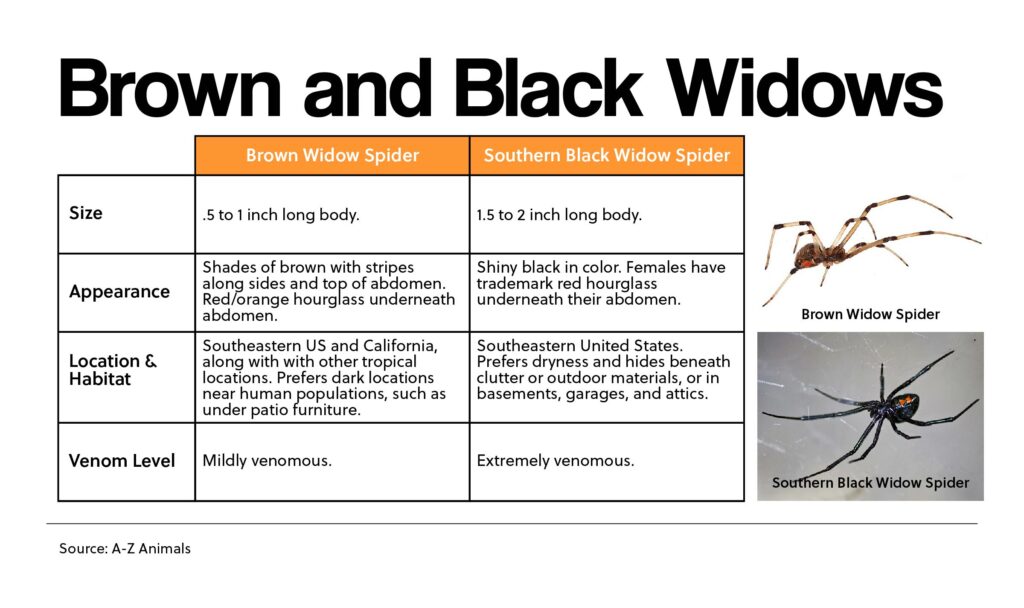
For many, black widows represent the creepiest of the creepy-crawlies. They are the second-most venomous spider in North America. Their glossy black abdomen and red spot makes them instantly recognizable. Most people avoid them.
Yet, despite their reputation, black widows face a lethal threat: their own cousins.
Southern black widows are shy hunters. They rarely leave their webs. That makes them vulnerable to the brown widow.
“Brown widows will aggressively go after black widows, chase them down,” said Louis Coticchio. He published his research this month. “They don’t play well with being neighbors.”
Brown widows come from South Africa. They are not as venomous as black widows. They are far more aggressive, though. Coticchio noticed that when brown and black widows are in the same area, the black widows disappear.
To find out why, Coticchio put black widows, brown widows, red house spiders, and others in the same habitat. They found that the hunting brown widows were 6.6 times more likely to kill black widows than other species. Young brown widows targeted black widows 80% of the time.
“Southern black widows were never the aggressor and always the prey,” Coticchio said.
Both brown and black widows build webs in the same territory. They like urban and suburban environments. So, Coticchio hypothesizes that eventually brown widows may drive black widows out of cities.
News brought to you by 
Read More News Stories Today!