
Parts of Sahara Turn a Shade of Green, Puzzling Scientists
October 1, 2024

Northern Africa’s Sahara Desert measures a vast 3,000 square miles. It's known as the largest “hot” desert in the world. It spans dry sandy valleys, mountains, salt flats, and barren rocky plateaus. But recently, parts of the Sahara have stood out to scientists for a different reason. They’re turning green.
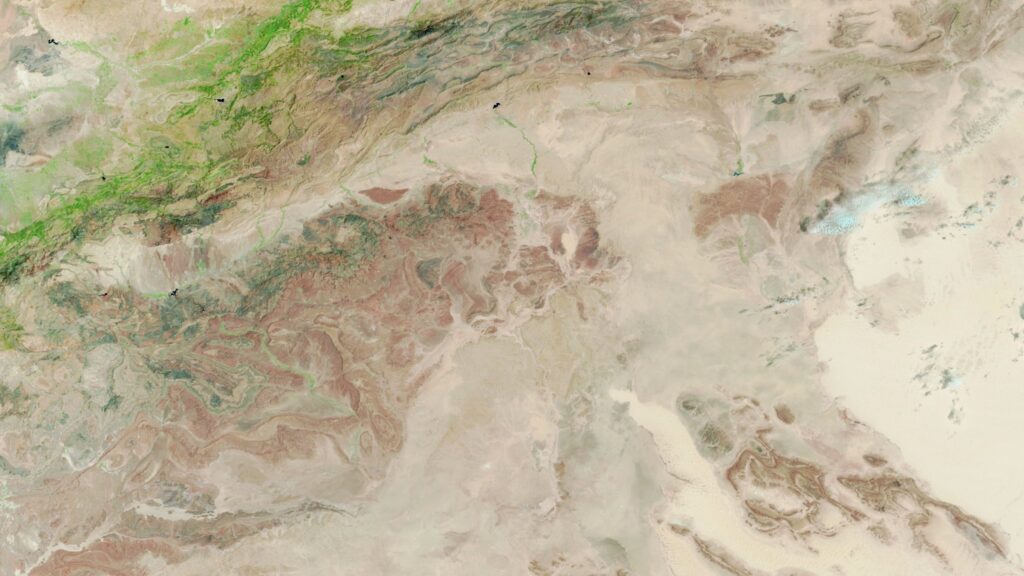
NASA has released satellite pictures of the desert showing green plant life. This includes leaves and grass. It's growing in regions that had been brown.
What’s the reason for this? Northern Africa is one of the driest places on Earth. But it's received a rare amount of high rainfall — five times its average in September. This has caused the greening of sections of the Sahara. But flooding has also plagued 14 countries, the United Nations said. Thousands of people have been displaced. Plus, many farms have lost crops in places where food is already in short supply.
What's causing the rare heavy rains? A northward shift in winds and clouds in a region near the equator called the Intertropical Convergence Zone (ITCZ). In this region, Southern Hemisphere winds from the southeast converge with Northern Hemisphere winds from the northeast. The mix of winds, blazing sun, and warming ocean water causes rising, moist air. This leads to thunderstorms and rainfall.
The ITCZ’s seasonal movement is driven by temperature changes between the Northern and Southern Hemispheres. In August or September, it hits its northernmost point. That's typically north of the equator in the Northern Hemisphere.
Scientists are unsure why the ITCZ has drifted farther north than normal. Near record warmth of the Atlantic Ocean due to climate change could be a reason, Francesco S.R. Pausata, an atmospheric science professor at the University of Quebec in Montreal, told The Washington Post.
Reflect: What do you think are some potential effects of climate change on the environment, and how might these changes impact people's lives?
Photo of a satellite image of the Sahara Desert from NASA.
News brought to you by 
Read More News Stories Today!