
Wealthy Nations Reach Controversial Deal to Spend $300 Billion on Climate Change
November 25, 2024

After two weeks of tense debate, the world has a new deal in place to combat climate change.
Delegates of the 29th United Nations’ (UN) Conference of Parties (COP) Framework Convention on Climate Change met in Baku, Azerbaijan. They reached an agreement early Sunday. The deal will give $300 billion from wealthy nations to poorer ones. It will be paid over the next 10 years. The deal fell far short of the $1.3 trillion experts contend is needed, though. Still, it was viewed as a victory by some.
The deal "marks a new era for climate cooperation and finance,” European Union (EU) Commissioner Ursula von der Leyen said in a social media post.
Critics argue that $300 billion is not nearly enough.
Ani Dasgupta is the president and CEO of the World Resources Institute. She told The Associated Press that poorer nations are disappointed. She thought richer nations should have “put more money on the table when billions of people’s lives are at stake."
Climate change leads to more violent storms and droughts. It can cause upticks in the spread of disease, too. These effects hurt developing nations more than others. They tend to lack resources to cope with disasters. Becoming more eco-friendly is also difficult for them. Many want to upgrade their power grids. They want wind power and solar farms. But upgrading to greener options requires funding they often don't have.
Nations agreeing to pay the $300 billion are those identified as “developed” in the 1992 UN climate talks. They include much of the EU, Canada, China, and the US. The latter two are the world’s largest producers of carbon. It is largely responsible for climate change.
Reflect: What do you think is the best way for countries to work together to solve global problems that affect everyone?
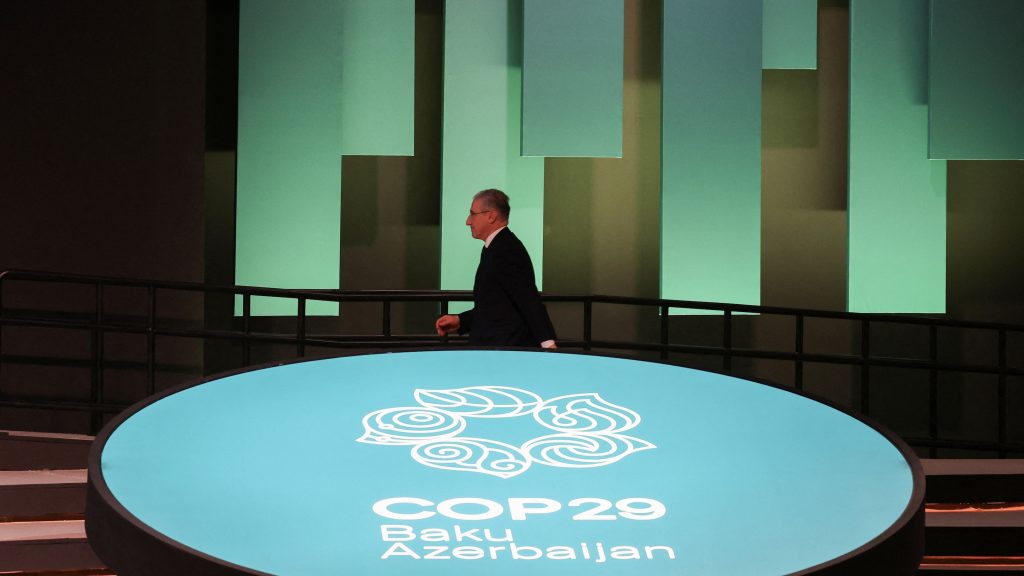
Photo of COP29 President Mukhtar Babayev walking during the COP29 conference from Reuters.
News brought to you by 
Read More News Stories Today!